
City News
Mojácar Local Police Patrol With Defibrillators in Their Vehicles

Mojácar Local Police officers are carrying out their patrol services with defibrillators in their vehicles. The headquarters has acquired two pieces of equipment and the officers have been trained in Basic Life Support and Automated External Defibrillation.
Mojácar Local Police is one of the first of the province’s police forces to carry these life-saving devices, that provide the municipality with greater safety, during their patrol services. One more example of their commitment to citizens and the duty of assistance they provide on a daily basis.
Mojácar Council Security councillor, María Luisa Pérez, emphasizes that the provision of these two defibrillators to the Mojácar Local Police Headquarters will mean a before and after in the safety and assistance work provided by officers in this Levante Almería municipality.
It was in June that the officers received the relevant training given by Advanced Life Support instructors from the company Sanur Emergencias with extensive experience in training and assistance in health emergencies. The concepts which they explained during the day are based on the recommendations of the European Resuscitation Council (ERC), which are those accepted by the National Plan for Cardiopulmonary Resuscitation (RCP)
The aim of the training is for the students to acquire the necessary knowledge, skills and abilities for performing Basic Life Support and Automated External Defibrillation and obtain the corresponding accreditation for the use of the defibrillator, which is now another tool for their work.
There is evidence that the majority of sudden deaths have a cardiac origin and that the highest percentage of survivors is in the group where Basic Life Support and Automated External Defibrillation are applied properly and early, including as essential steps the immediate activation of the Health Emergencies System, the correct identification of cardiorespiratory arrest.
In these cases the participation of the first responders is essential. Local Police officers are on numerous occasions the first to arrive at the scene of the emergency. Until now, their action in the event of a cardiorespiratory arrest was limited to alerting the emergency services, and in the best possible scenario, initiating basic life support consisting of mouth-to-mouth ventilation and external cardiac massage until the arrival of the advanced life support teams. However, the appearance of automated external defibrillators, electro-health devices capable of analysing heart rhythm and of recognising the presence or absence of ventricular fibrillation or ventricular tachycardia, has made scientific societies, together with public administrations, promote the use of these devices by duly qualified, non-healthcare personnel, who find themselves in similar situations. The objective is that they can use defibrillation immediately while the emergency services are on their way.
City News
Mojácar Finalizes the Restoration of a Great Symbol: the Pirulico Tower
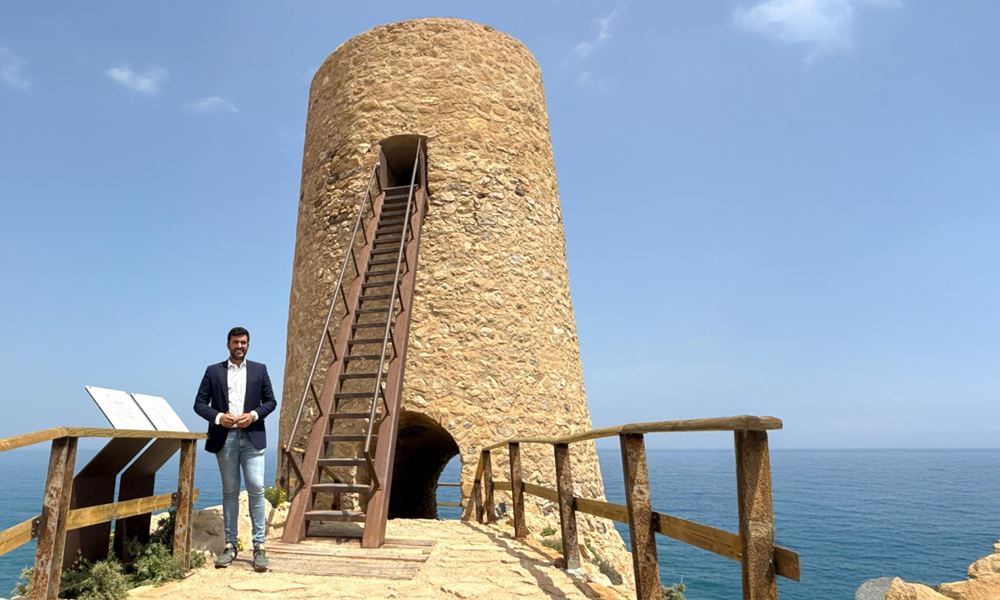
The Pirulico Tower, one of the most representative monuments of the Mojácar coastline and of Moorish defensive architecture in the Levante area of Almería, is now open to the public following the completion of the restoration work carried out over the last month.
The project, financed with a total investment of 16,575 euros, has allowed the consolidation of the tower’s upper skylight, improved accessibility with the installation of new handrails, and incorporated efficient solar lighting, all while respecting its status as an Asset of Cultural Interest (BIC) and adapting to the regulations for the protection of the land and the natural surroundings in which it is located.
Francisco García Cerdá, Mayor of Mojácar, gave a very positive evaluation of the completion of the project: “Restoring and preserving the Pirulico Tower is not only an institutional responsibility, but also an act of respect for our history and our identity. With these works, Mojácar takes another step forward in its commitment to a sustainable tourism model, where heritage is the focus. Now, this icon is once again an accessible, safe place, ready to continue exciting those who visit us.”
The installation of efficient solar lighting not only guarantees the energy sustainability of the monument, but also completely transforms its presence in Mojácar’s nocturnal landscape. Thanks to this undertaking, the Pirulico Tower becomes a visual landmark visible from much of the coastline, especially from the municipality’s most visited beaches. This scenic effect creates an emotional connection between the visitor and the heritage, inviting them to rediscover the local history in a new light, literally. The tower, now also the focus at dusk, adds a new attraction to Mojácar’s tourist offer, extending its enjoyment beyond the daytime.
The project also strengthens the municipality’s tourist and cultural offer, integrating this spot into already consolidated interpretative and hiking routes in the area. In the words of the Tourism Councilor, María Gracia Alarcón: “The Pirulico Tower is much more than a historical construction; it is one of the main attractions for those who choose Mojácar in search of authenticity, landscape and history. With this action we guarantee its preservation and improve the experience of those who visit us, reinforcing Mojácar’s image as a destination where the past is experienced with a future.”
The tower, located in the Bordonares area, is part of the inventory of municipal facilities and is situated in an enclave of high environmental value, designated as Non-Developable Land of Special Protection. The works have had the pertinent authorizations, including that of the Regional Ministry of Sustainability and the Environment, complying with the regulations for the visual and landscape protection of the surroundings.
With the reopening of the Pirulico Tower, Mojácar consolidates a line of work focused on the enhancement of its historical and natural heritage, integrating it respectfully into the municipality’s tourism and cultural strategy.
City News
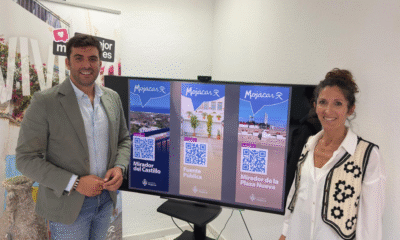
New QR Audioguides to Discover its Heritage From the Sand in Mojácar
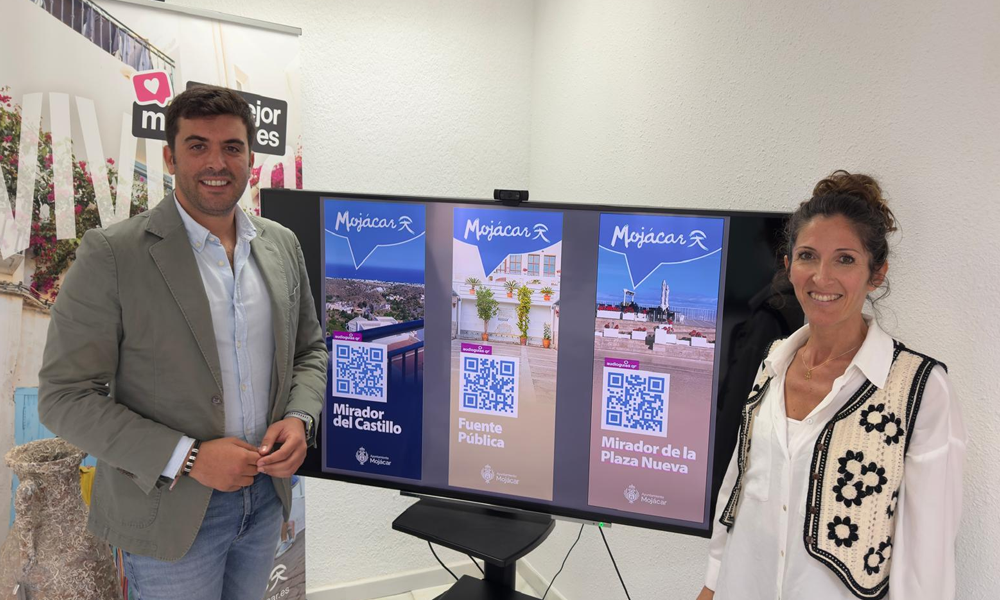
Mojácar, one of the most emblematic destinations on the Almeria coast, has unveiled an innovative tourist initiative that reinforces its commitment to a more comprehensive, experiential and cultural tourism model. Starting this Easter, visitors will not only be able to enjoy sun and sea, but also discover the history of the municipality thanks to a system of audio guides accessible directly from the beach itself via QR codes.
This initiative allows users to listen in several languages to the history of the main monuments and corners of the old town: the Santa María Church, the City Gate, the Public Fountain, the Castle Viewpoint, the Plaza Nueva Viewpoint, the Indalo, Mariquita la Posá, the Moors and Christians Festivities and the Mojácar origin of Walt Disney. By simply scanning a QR code from their mobile phone, tourists can take an audio tour while relaxing on the sand, promoting curiosity and the desire to visit the historic centre of the municipality.
The proposal is part of a broader strategy promoted by the municipal Council to diversify the tourist offer and enhance the value of visitors’ stays in Mojácar. In addition to offering a unique sun and beach experience, this action aims to enable visitors to discover the most significant elements of the local identity in a simple and accessible way.
“With this action we want to remind our visitors that Mojácar is much more than sun and beach. Our heritage, our history and our essence also deserve to be discovered, and now we are making it available to everyone from the most visited place: the beach”, affirmed the Mayor of Mojácar, Francisco García Cerdá. “It’s an invitation to, after relaxing in the sun, go up to the old town and fall in love with our past as well.”
The Tourism Department has worked to create attractive, accessible content adapted to the new ways of consuming culture, especially among tourists who are looking for authentic experiences. The inclusion of representative elements such as Mariquita la Posá, the City Gate and the Indalo highlights local traditions and symbols that not only enrich the visit, but also highlight the uniqueness of Mojácar compared to other destinations.
“Today’s visitors don’t just want to relax, they want to learn, connect with the place they are visiting and take away more than just photos. This audio experience from the beach is a different way of getting to know Mojácar, of planting the seeds of curiosity, of motivating tourists to walk through our streets, to appreciate our history”, stated Tourism Councillor María Gracia Alarcón. “What’s more, by offering it in several languages, we broaden the reach to an international profile that increasingly values cultural tourism.”
This Mojácar project reinforces the municipality’s digital presence, integrating technological tools that enrich the visitor experience without the need for complex apps or additional devices. A simple gesture – scanning a QR code – is all it takes to begin a journey through the history and soul of Mojácar.
Mojácar, classified as one of the most beautiful villages in Spain and one of the happiest to live in, in this way reinforces itself as a destination where sun and beach tourism harmoniously coexists with culture, tradition and innovation.
City News
Mojácar Reinforces Its Position as a Destination of Excellence for Easter
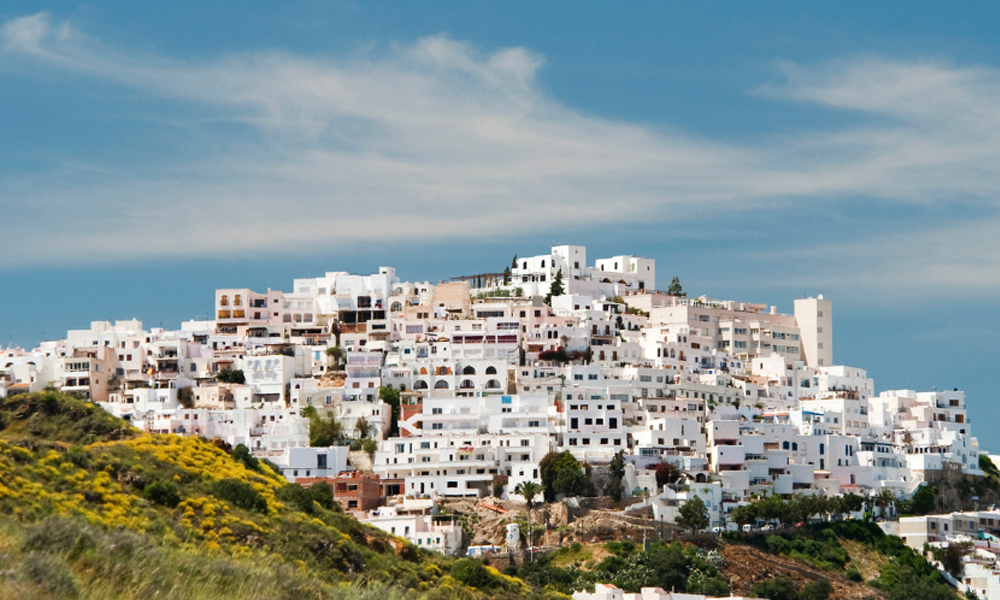
Mojácar is preparing for one of the busiest Easter Weeks in recent years, with a forecast of a very high hotel occupancy rate and many establishments near to full capacity.
The combination of tradition, culture, privileged climate and a quality tourism offer has once again made Mojácar one of the Mediterranean’s favourite destinations.
According to data gathered by the Tourism Department, many hotels will reach 90% and 100% occupancy on Maundy Thursday and Good Friday, and others will exceed 85% in their average bookings for the whole week.
At the same time, some recently opened accommodation and several tourist apartments are still offering availability, which represents an opportunity for last minute visitors.
In addition to the excellent tourist response, Mojácar presents a full Easter Week programme with religious and cultural events in the heart of the old town. The processions on Maundy Thursday and Good Friday will mark the most emotional moments, starting from the Santa María Church and going through the municipality’s most emblematic streets.
The spring-like weather will be another of the main attractions, with temperatures forecast to be between 22 and 25 degrees and no rain, ideal for enjoying both the religious events and the beach and open-air leisure.
The Local Council has activated a special mobility plan, reinforcing public transport between Mojácar Pueblo and Mojácar Playa for the enjoyment of both visitors and residents of the municipality
Francisco García, Mayor of Mojácar, has been very positive about the response from the tourism sector: “Easter Week once again positions Mojácar as one of the leading destinations in the Mediterranean. Our offer combines tradition, culture, beach and fine cuisine, and that translates into an almost full occupancy rate”.
Tourism Councillor María Gracia Alarcón highlighted the joint work that has made this success possible: “These figures are the result of coordinated work between Mojácar Council, business owners and tourism promoters. Mojácar offers much more than sun and beach, and increasingly more visitors are discovering it all year round, not just in summer.”.
With all these elements, Mojácar approaches an Easter Week marked by the high number of visitors, the quality of its tourism offer and the deeply-rooted nature of its traditions. The municipality thus reaffirms its commitment to a sustainable, welcoming and quality tourism model, consolidating itself as an essential destination not only in summer, but also at key times of year such as this Easter Week.

Mojácar Finalizes the Restoration of a Great Symbol: the Pirulico Tower

New QR Audioguides to Discover its Heritage From the Sand in Mojácar

Mojácar Reinforces Its Position as a Destination of Excellence for Easter

Mojácar Dedicates a Plaza to Antonio Bonet Correo

Discover Coastal Paradise: Hiking or Biking from Villaricos to Mar de Pulpí
-

 City News12 months ago
Mojácar Gymnasts Stand Out in the Educational Rythmic Gymnastics Circuit
-
 City News10 months ago
Mojácar Finalizes the Restoration of a Great Symbol: the Pirulico Tower
-
 City News12 months ago
Mojácar Breathes Anew: Summer Whispers Echo Through Ancient Streets and Along Sun-Kissed Shores
-
 City News11 months ago
New QR Audioguides to Discover its Heritage From the Sand in Mojácar
-
 In Almería11 months ago
Discover Coastal Paradise: Hiking or Biking from Villaricos to Mar de Pulpí
-
 City News11 months ago
Mojácar Dedicates a Plaza to Antonio Bonet Correo
-
 City News12 months ago
The Art of Enjoying the Landscape by Decorating Benches
-
 City News11 months ago
Mojácar Reinforces Its Position as a Destination of Excellence for Easter